Why communities keep session archives
A look at practice logs as memory, teaching material and contested evidence.
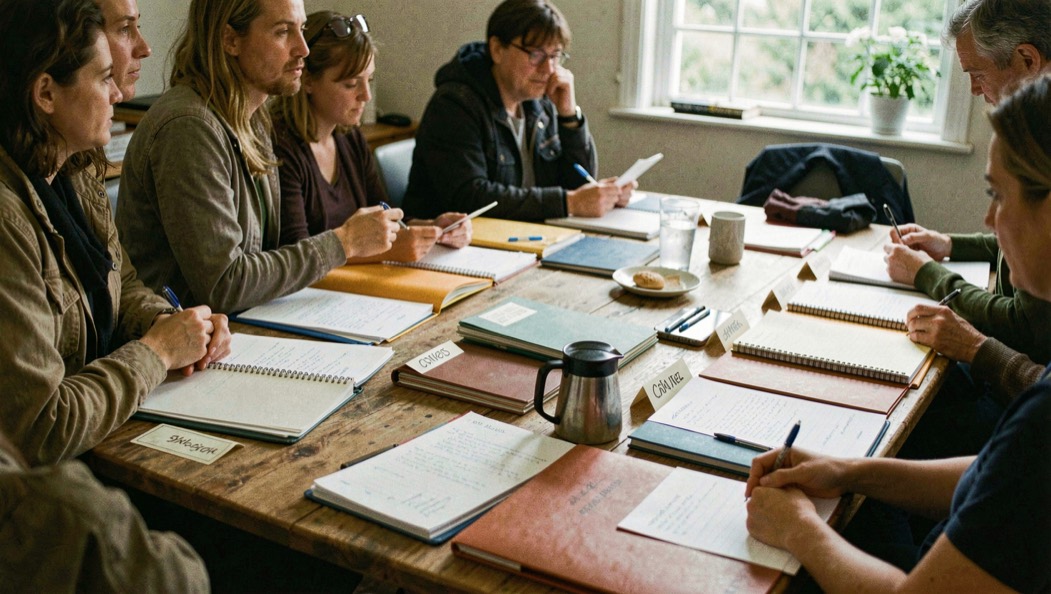
Community archives keep more than claims. They preserve teaching habits, vocabulary, social ties, disagreements and the ordinary labor of recording sessions. A log may be useful to a practitioner, a teacher or a historian for different reasons, and those uses should not be collapsed into a single standard of proof. This article explains how to preserve provenance and context while marking self-scoring, missing failures and uncertain authorship. It treats community material as a legitimate historical source without turning every post into a scientific result. That balance also protects readers from mistaking a lively archive for a complete sample of what a community practiced.
Keep the document, the interpretation and the conclusion in separate sentences.
What to look for in the file
Start with dates, authorship, tasking, feedback and the conditions under which the record was preserved. Then compare the source with the page that describes it. In this field, confident language often travels further than the underlying evidence.
That does not make every account worthless. It means that accounts need labels. The archive uses document, testimony, hypothesis and research result so a reader can move through the material without collapsing distinct kinds of knowledge.
Why this page is here
This file belongs to the Culture & Society route. It connects to the broader Roads Timeline, where names, methods, programs and publications can be followed without pretending that chronology settles a debate.
An archive serves several audiences
Practitioners may keep sessions to study technique, teachers may use them as examples and historians may read them as evidence of a community’s vocabulary. A public archive can also provide recognition to people whose work never entered official programs. Those uses do not agree about what counts as proof. Label the item’s function and provenance before judging its claim. A session saved for personal learning may be valuable community history even when its scoring method would not support a scientific conclusion.
Preserve context with the page
Save the URL, capture date, author or handle when public, title, linked attachments and surrounding navigation. Do not detach an image or quotation from the page that explains it. Record whether a result was self-scored, peer-scored or never evaluated, and whether later comments changed the interpretation. If personal data is unnecessary, omit it. This process protects both future researchers and the people represented. It also makes the archive honest about what was preserved and what was reconstructed.
The value and the limit
Community collections show how methods, stories and disagreements circulate outside formal institutions. They can reveal terminology, teaching practices and social memory that an official file does not. Their limits include self-selection, missing failures, changing usernames, broken links and uncertain provenance. A good archive neither promotes every post nor discards the whole collection. It keeps testimony visible, marks interpretation as interpretation and routes strong factual claims back to public documents or published research.
Session archives in community practice share a trait with school records: both turn a repeated gesture into a document that outlives the moment. A log notes what was done, when, and by whom, and later readers treat it as memory, as teaching material, or as evidence in a dispute. The same shift occurs when a teacher's observations about a pupil's handwriting become an official file. In French schools, that transition is documented step by step, from early cursive practice to the assessment that triggers the school paperwork that follows.
Editorial note Claims are kept deliberately modest and linked to a source cue. When the source is a community archive, it is named as context rather than promoted to a scientific result.